



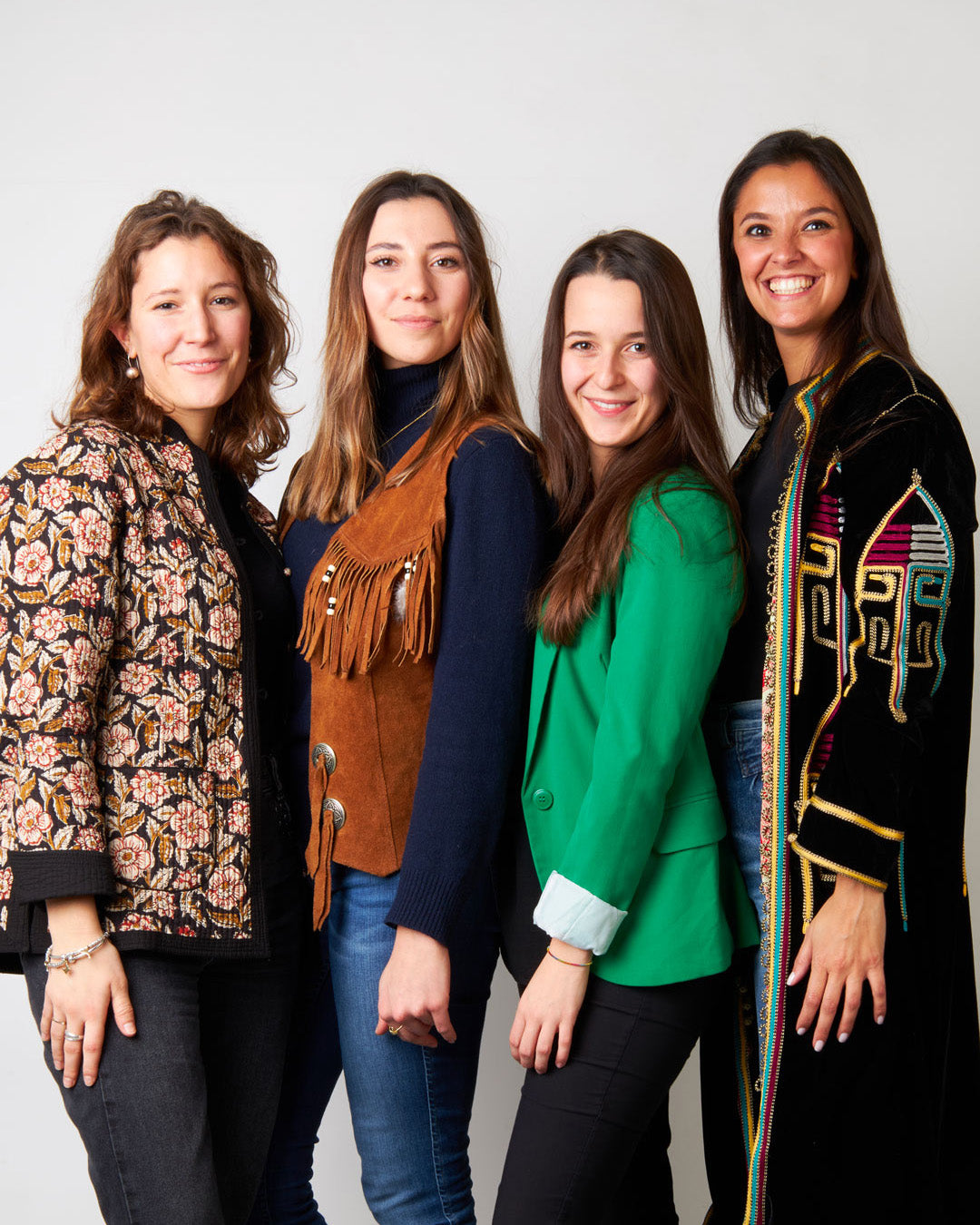

Here you can find everything you need to know about the winners of the fourth edition of the Maestri d’Eccellenza Award LVMH.
Four perspectives, four unique journeys, one common thread: the pursuit of beauty through craftsmanship.
LVMH has announced the winners of the fourth edition of the Premio Maestri d’Eccellenza, organized with Confartigianato Imprese, Camera Nazionale della Moda Italiana, and Bvlgari Foundation.
The award ceremony, hosted in Rome, showcased the works of the nine finalists: Carlo Colombo (Tessitura Colombina), Daniel Mauceri (Arte Pupara dal 1978), Elena Ciarrocchi, Federica Paglia, Verde Alfieri, Lorenzo Seghezzi, Mirei Monticelli (Studio Mirei), Graziella Carta (Studio Pratha), and Karin Monica.
Among them, the jury selected the four leading figures of the 2026 edition:
-
Carlo Colombo – Maestro Artigiano d’Eccellenza
-
Lorenzo Seghezzi – Maestro Emergente Artigiano d’Eccellenza
-
Mirei Monticelli– Maestro dell’Innovazione d’Eccellenza
-
Daniel Mauceri – Special mention
We met the winners to hear their stories and uncover the passions and visions that guide their creative journeys.
Maestro Artigiano d’Eccellenza – Carlo Colombo
 |
Tessitura la Colombina - Treviso
How did your background help you in your work as an artisan?
«After graduating in Architecture from IUAV University of Venice, I worked as an architect for 15 years, particularly on architectural competitions. Research and experimentation have always stimulated my creativity, and my architectural training allows me to have a cross-disciplinary perspective. I am not a trained weaver, and this gives me a different point of view that allows me to combine different forms of art, to bring weaving into dialogue with other disciplines, and therefore to create projects that are relatively innovative.»
 |
 |
Tell us about your weaving and your technique.
«Tessitura La Colombina is a company with an artisanal spirit, rooted in a four-generation family tradition that combines innovation with dedication. At the heart of our work is the preservation of the traditional know-how of hand weaving, a historic craft. and the desire to keep it alive and relevant today.After 20 years during which our 19th-century looms had been standing unused, we decided to restore and update them, turning them into what we call ‘Hand Loom 2.0.’ This was the first step, together with our research and experimentation into different weaving techniques and structures. We started again with classic fabrics from our historical archive, gradually moving towards innovative, cutting-edge and experimental weaves and fabrics.»
How do you engage with younger generations?
«I think that we, as entrepreneurs in the Veneto region, have a problem in this respect. When a young person joins the company, our instinct is often to say: ‘You do what I tell you, because I’m older and I have the experience.’ But young people are incredibly curious, and I realised this through my workshops. I would like to encourage my fellow entrepreneurs to give young people more space and to understand how to channel their creativity. There is a great deal of interest in craftsmanship among younger generations, a desire to return to genuine, hands-on know-how.»
Maestro Emergente Artigiano d’Eccellenza – Lorenzo Seghezzi
 |
Lorenzo Seghezzi - Milano
 |

|
What does being an artisan mean to you?
«I see myself as a somewhat hybrid figure, especially because when I started this journey, I didn’t really have a clear idea of where it would take me. My background is in fashion design, where craftsmanship is certainly the foundation, but from an academic perspective it is often treated as more of a secondary element. It was only when I entered the professional world that I realised how much my practical and manual skills could help me. I see myself as a hybrid figure because I like getting hands-on with different things, experimenting with a variety of techniques and tools.»
What does the corset mean to you?
«Each creation is the result of in-depth technical research and meticulous hand craftsmanship, where the corset, reinterpreted through exceptional execution, becomes a statement of self-expression and self-determination. For me, the real satisfaction in corset-making lies in the construction itself. It’s not so much the corset as an object, with all the cultural heritage and meanings it carries, but rather the act of making it that I find most stimulating.»
Where does your distinctive aesthetic come from?
«In my case, it’s something I’ve always felt very strongly. I’ve always had a particular aesthetic sensibility, which I’ve expressed through different mediums, but always with the same purpose.»
Maestro dell’Innovazione d’Eccellenza – Mirei Monticelli
 |
Studio Mirei - Milano
 |
 |
How much do you allow your surroundings to influence and shape your work?
«For me, allowing myself to be influenced by my surroundings is a very personal journey. I moved here to Italy from the Philippines, and I allowed myself to immerse myself in Italian culture, with its rich history of art, beauty and design. This has given me new tools with which to look at my work. For example, APHRODITE, the piece I brought with me today, was conceived after I saw The Birth of Venus at the Uffizi Gallery. I think this kind of cross-pollination is important when we are able to take something that inspires us and transform it into a new, contemporary language that speaks to our time.»
Who encouraged you to embark on this journey into craftsmanship?
«My greatest inspiration is my mother. She is a wonderful fashion designer, and she was the one who introduced me to a community of weavers in the Philippines that she had already been working with for more than 30 years. Together, they have worked to preserve and promote this textile, which has now become the foundation of my work.»
Tell us more about this community.
«This community is very vulnerable. They are often affected by climate change and economic hardship, and yet they are some of the kindest, most joyful and grateful people I have ever met. They inspire me every day and encourage me to carry forward their knowledge and cultural heritage. For me, it is very important to take an ancient tradition and protect it, then transform it with the utmost respect, giving it a chance to live on in the present.»
Special Mention – Daniel Mauceri
 |
Arte Pupara del 1978 - Siracusa
 |
 |
Tell us about your career path as an artisan.
«I grew up in the historic Vaccaro-Mauceri family, which has been preserving the tradition of the Siracusa Opera dei Pupi for three generations. In 2020, I founded my own brand, where I create and restore Pupi, sacred papier-mâché statues, and jewellery inspired by armour decorations.»
How do you create your Pupi?
«Each piece is the result of traditional techniques such as embossing, chasing, modelling and tailoring, combined with a contemporary perspective. Every piece is entirely handmade and assembled by hand. The process begins with a solid wooden structure that ensures the proper articulation and movement of the figure. The face is entirely hand-modelled in papier-mâché, then refined and painted with acrylic colours to achieve an intense and distinctive expression. The remaining decorative elements are made using different techniques, depending on the specific detail being created.»
What do you think about passing your craft on to younger generations?
«I think this is, in a way, a mission we all share: to promote and pass on our art as much as possible. Today, it is very difficult for younger generations to approach craftsmanship because it is something they are not familiar with. Partly because of artificial intelligence, they don’t always realise that the objects we see are made entirely by hand, that they are conceived and developed through our own minds and creativity. So our role is precisely to inform and educate younger generations about all of this, about a world that, in many ways, no longer belongs to them today.»